Learn>Explore by Concern>Menopause Hair Loss

The Complete Guide to Menopause Hair Loss

Menopausal hair loss growth serum with PTT6

Why Trust This Guide?

Menopause hair loss is one of the most common yet least discussed symptoms of midlife hormonal change. Despite affecting millions of women worldwide, many women struggle to find clear, evidence-based information that explains why their hair is changing and what can be done about it.

This guide brings together insights from clinical studies, trichologists, dermatologists, scalp specialists and women’s health experts who regularly treat women experiencing hair thinning during perimenopause, menopause and post-menopause.

The information throughout this guide has been compiled from CALECIM Professional's menopause hair loss resource library, including interviews and commentary from leading practitioners such as Dr Manav Bawa, Kelly Morrell, Dr Sharon Wong, Dr Angela Tewari, Dr Munir Somji, Anabel Kingsley and Eva Proudman.

It also incorporates perspectives from beauty journalist Sophie Beresiner, whose personal experience with perimenopausal hair loss was featured in The Sunday Times, helping to bring greater awareness to the emotional impact of female hair loss.

Together, these expert insights help explain the science behind menopause hair loss, the treatment options available today and the practical steps women can take to support healthier-looking hair growth.

At a Glance

Menopause hair loss can appear as increased shedding, reduced volume, a widening part, visible scalp, finer texture or slower regrowth. It is often linked to hormonal change, follicle miniaturization, genetics, nutrition, stress, sleep and overall health. Treatment depends on the cause and may include medical evaluation, nutritional support, scalp health optimisation, HRT where appropriate, minoxidil, professional treatments and growth factor-based approaches such as CALECIM’s PTT-6® Hair Serum protocol. Earlier and consistent intervention is usually associated with better outcomes.

Explore Further
How to stop COVID-related hair loss
After illness or COVID-19
Is female hair loss different?
Stress and major life events
Do weight loss drugs affect hair and skin?
GLP-1 medication and weight change
Share

Menopause Basics

What Is Menopause Hair Loss?

Menopause hair loss refers to the thinning, shedding and reduction in hair density that can occur during perimenopause, menopause and post-menopause. Hormonal changes may affect the hair growth cycle, leading to reduced volume, increased scalp visibility and slower regrowth. For many women, the first signs are subtle. Hair may feel less dense, a ponytail may become thinner or.

Read more Read less

Menopause hair loss refers to the thinning, shedding and reduction in hair density that can occur during perimenopause, menopause and post-menopause. Hormonal changes may affect the hair growth cycle, leading to reduced volume, increased scalp visibility and slower regrowth.

For many women, the first signs are subtle. Hair may feel less dense, a ponytail may become thinner or the scalp may become more visible in certain lighting conditions.

Clinical Perspective

Dr Manav Bawa, Medical Director at Time Clinic London, explains that declining estrogen and progesterone levels can affect both the scalp environment and the hair growth cycle, making follicles more susceptible to thinning over time.

Kelly Morrell, scalp specialist and founder of Scalp Confidential, notes that many women dismiss early changes as “just aging” when in reality they may be the first signs of menopause-related hair thinning.

Read more

Why Does Menopause Cause Hair Thinning?

During menopause, estrogen levels decline. This can shorten the hair growth phase and increase the proportion of follicles in the resting and shedding phases. Hair follicles may also become more sensitive to androgens, contributing to gradual thinning and miniaturization. Hair growth is heavily influenced by hormones, and estrogen is thought to play an important role in helping maintain.

Read more Read less

During menopause, estrogen levels decline. This can shorten the hair growth phase and increase the proportion of follicles in the resting and shedding phases.

Hair follicles may also become more sensitive to androgens, contributing to gradual thinning and miniaturization.

Hair growth is heavily influenced by hormones, and estrogen is thought to play an important role in helping maintain the normal hair growth cycle. During the reproductive years, estrogen may help support longer growth phases and contribute to fuller, thicker-looking hair. As estrogen and progesterone levels decline during perimenopause and menopause, this balance begins to change.

One consequence is that hairs may spend less time actively growing and more time in the resting and shedding phases of the hair cycle. At the same time, some follicles may gradually become smaller and produce finer hairs with each successive growth cycle — a process known as follicle miniaturisation.

Hormonal changes can also increase the relative influence of androgens, including dihydrotestosterone (DHT), on genetically susceptible follicles. This may contribute to the gradual reduction in hair density commonly seen in female pattern hair loss.

As a result, many women notice changes such as:

  • Increased hair shedding
  • Reduced overall volume
  • A widening centre part
  • Increased scalp visibility
  • A thinner ponytail
  • Hair that feels finer or more fragile
  • Hair that no longer grows as long or as thick as it once did

Clinical Perspective

According to Dr Manav Bawa, menopause-related thinning is often the result of both hormonal changes and increased follicle sensitivity to androgens. Over time, this may contribute to progressive miniaturization where hairs grow back finer and shorter than before.

Read more

Why Does Hair Shed After 40?

Hair shedding after 40 can be influenced by a number of factors including perimenopause, menopause, stress, nutritional deficiencies, thyroid conditions and female pattern hair loss. Many women experience a combination of factors rather than a single cause. As women enter their 40s and 50s, hormonal fluctuations associated with perimenopause and menopause can affect the normal hair growth cycle,.

Read more Read less

Hair shedding after 40 can be influenced by a number of factors including perimenopause, menopause, stress, nutritional deficiencies, thyroid conditions and female pattern hair loss.

Many women experience a combination of factors rather than a single cause.

As women enter their 40s and 50s, hormonal fluctuations associated with perimenopause and menopause can affect the normal hair growth cycle, increasing the proportion of hairs in the shedding phase. At the same time, follicles may become more susceptible to miniaturisation, resulting in finer, weaker hair growth over time.

However, hormones are only part of the story. Hair specialists frequently identify additional contributing factors including low iron stores, vitamin D deficiency, thyroid dysfunction, chronic stress, poor sleep, significant weight loss, illness, medication changes and genetic female pattern hair loss. These factors may occur independently or alongside menopause, making it difficult to identify a single cause.

For many women, hair shedding after 40 is therefore not the result of one event but the cumulative effect of several biological, hormonal and lifestyle changes occurring simultaneously.

Clinical Perspective

Dr Manav Bawa notes that hair loss during midlife is often multifactorial. In addition to hormonal changes, he highlights ferritin (iron stores), vitamin D, vitamin B12, folate, zinc, thyroid function, stress levels and sleep quality as important considerations when evaluating excessive shedding.

Read more

What Is The Difference Between Hair Shedding And Hair Thinning?

Hair shedding refers to increased hair fall. Hair thinning refers to a gradual reduction in hair density and follicle size. Many women experiencing menopause-related hair loss experience both. Hair shedding occurs when a greater number of hairs than usual enter the resting and shedding phases of the hair growth cycle. Women may notice more hair on their pillow,.

Read more Read less

Hair shedding refers to increased hair fall. Hair thinning refers to a gradual reduction in hair density and follicle size.

Many women experiencing menopause-related hair loss experience both.

Hair shedding occurs when a greater number of hairs than usual enter the resting and shedding phases of the hair growth cycle. Women may notice more hair on their pillow, in the shower drain, on their hairbrush or on their clothing. Shedding can occur suddenly and is often triggered by factors such as hormonal changes, illness, significant stress, nutritional deficiencies, rapid weight loss or certain medications.

Hair thinning is different. Rather than losing more hairs than normal, the hair follicles themselves gradually produce finer, weaker and shorter hairs. Over time, this process—known as follicle miniaturisation—can reduce overall hair density and make the scalp more visible, particularly around the centre parting, crown and temples.

Many women experiencing menopause-related hair loss notice both processes occurring simultaneously. Increased shedding may make the hair feel noticeably thinner in the short term, while ongoing miniaturization can gradually reduce density over months or years.

Trichologist Perspective

Kelly Morrell describes common menopausal hair concerns as increased scalp visibility, widening partings and changes in hair texture. Hair may become finer, flatter or less voluminous long before women recognize it as hair thinning.

Read more

What Is Hair Miniaturization?

Hair miniaturization occurs when hair follicles progressively produce finer, shorter and weaker hairs over time. As the follicle becomes smaller, each new hair growth cycle may produce a thinner strand than the one before it. Over time, thick terminal hairs gradually become finer, reducing overall density, volume and scalp coverage. Miniaturization is commonly associated with female pattern hair.

Read more Read less

Hair miniaturization occurs when hair follicles progressively produce finer, shorter and weaker hairs over time. As the follicle becomes smaller, each new hair growth cycle may produce a thinner strand than the one before it.

Over time, thick terminal hairs gradually become finer, reducing overall density, volume and scalp coverage.

Miniaturization is commonly associated with female pattern hair loss and is one of the primary reasons women notice a widening part, increased scalp visibility and a reduction in ponytail thickness.

Unlike temporary hair shedding, miniaturization is a gradual process that often develops over months or years. Because it occurs slowly, many women do not recognise it until they compare photographs or notice significant changes in density.

What Happens During Miniaturization?

A healthy follicle produces thick, pigmented terminal hairs that provide fullness and coverage.

As miniaturization progresses

  • Hair strands become progressively finer.
  • Hair growth cycles may become shorter.
  • Hair may not grow as long as it once did.
  • Individual hairs provide less scalp coverage.
  • More scalp becomes visible through the hair.
  • Overall volume and density gradually decline.

Eventually, some follicles may produce extremely fine, almost invisible hairs that contribute little to overall hair density.

Clinical Perspective

Dr Manav Bawa explains that hair miniaturization is one of the key biological processes underlying female pattern hair loss and menopause-related thinning. As hormonal changes affect the scalp environment, hair follicles may gradually become smaller and produce finer, weaker hairs with each successive growth cycle.

Over time, healthy terminal hairs can be replaced by shorter, thinner hairs that provide less scalp coverage. Dr Bawa notes that women may first notice this as a widening centre part, increased scalp visibility, reduced ponytail thickness or a gradual loss of overall volume.

He also highlights that miniaturization is often accompanied by changes in the hair growth cycle itself. The growth phase may become shorter, meaning hairs spend less time actively growing before entering the resting and shedding phases. This can result in hair that not only appears thinner but may also struggle to achieve its previous length and fullness.

According to Dr Bawa, menopause may also reveal or accelerate underlying female pattern hair loss in women who are genetically predisposed, making miniaturization one of the most important signs to identify early when assessing hair thinning.

Read more

Signs & Symptoms

What Are The Early Signs Of Menopause Hair Loss?

Common signs include: Many women begin noticing these changes during perimenopause, before menopause itself. Kelly Morrell reports that widening partings, visible scalp and changes in texture are among the earliest signs she observes in women seeking help for menopause-related hair concerns. Former beauty director Sophie Beresiner documented her own experience with perimenopausal hair loss in The Sunday Times,.

Read more Read less

Common signs include:

  • Increased shedding
  • Reduced volume
  • A widening centre part
  • Increased scalp visibility
  • Reduced ponytail thickness
  • Slower regrowth
  • Finer hair texture

Many women begin noticing these changes during perimenopause, before menopause itself.

Trichologist Perspective

Kelly Morrell reports that widening partings, visible scalp and changes in texture are among the earliest signs she observes in women seeking help for menopause-related hair concerns

Published Perspective

Former beauty director Sophie Beresiner documented her own experience with perimenopausal hair loss in The Sunday Times, describing the emotional impact of noticing visible scalp changes and a gradual loss of density.

After exploring a range of treatment options, Sophie incorporated CALECIM’s Hair Serum into her hair restoration routine and wrote about her experience as part of her broader journey to address perimenopausal hair loss. Her story helped bring greater awareness to a symptom that many women experience but few openly discuss, highlighting both the emotional and practical challenges of navigating hair loss during midlife.


Read more

Contributing Factors

What Vitamins And Nutrients Affect Hair Growth?

Hair growth may be affected by: While supplements can be helpful when a deficiency is identified, more is not always better. Hair follicles require adequate protein, iron, vitamin D, vitamin B12, folate and zinc to support normal growth. For many menopausal women, low ferritin (iron stores) and vitamin D insufficiency are among the most commonly identified findings. A.

Read more Read less

Hair growth may be affected by:

While supplements can be helpful when a deficiency is identified, more is not always better. Hair follicles require adequate protein, iron, vitamin D, vitamin B12, folate and zinc to support normal growth. For many menopausal women, low ferritin (iron stores) and vitamin D insufficiency are among the most commonly identified findings. A balanced diet, appropriate testing and targeted supplementation where required are generally more effective than taking multiple hair supplements without identifying an underlying deficiency.

  • Protein intake
  • Iron status
  • Vitamin D
  • Vitamin B12
  • Zinc
  • Thyroid health

Women concerned about hair loss should discuss appropriate testing with a healthcare professional.

Clinical Perspective

Dr Manav Bawa highlights ferritin, vitamin D, B12, folate, zinc and thyroid dysfunction as common factors that can contribute to or worsen hair shedding.

Consultant Trichologists Anabel Kingsley and Eva Proudman emphasize that hair follicles are highly sensitive to overall health and nutritional status. Factors such as inadequate protein intake, low iron stores, nutritional deficiencies, significant stress, illness and hormonal fluctuations may all affect the quality of hair produced by the follicle. For this reason, they advocate looking at hair health holistically, alongside any targeted hair restoration treatments.

Recognizing subtle changes in hair quality early may help women seek support before significant reductions in density become more noticeable.


Read more

Treatment & Regrowth

Can Menopausal Hair Loss Grow Back?

The answer depends on the underlying cause. Temporary shedding may improve once the trigger is addressed. Where follicle miniaturization has occurred, earlier intervention is often associated with better outcomes. Treatment approaches may include addressing nutritional deficiencies, supporting scalp health, managing underlying health conditions and using hair restoration therapies designed to support healthier-looking hair growth.

Read more Read less

The answer depends on the underlying cause.

Temporary shedding may improve once the trigger is addressed. Where follicle miniaturization has occurred, earlier intervention is often associated with better outcomes.

Treatment approaches may include addressing nutritional deficiencies, supporting scalp health, managing underlying health conditions and using hair restoration therapies designed to support healthier-looking hair growth.

Because hair grows slowly, consistency is important and visible improvements typically require several months.

Clinical Perspective

In a clinical evaluation involving women with menopausal and androgenetic hair loss, participants using a PTT-6® hair restoration protocol demonstrated visible improvements in density and overall hair appearance over a 12-week period.

Read more

Is It Too Late To Regrow Hair After Menopause?

Earlier intervention is generally associated with better outcomes, but many women still see meaningful improvements even after years of thinning. Hair follicles often exist on a spectrum between healthy growth and complete inactivity. Where follicles remain viable, supporting scalp health, addressing nutritional deficiencies and using targeted hair restoration approaches may help improve hair appearance, density and quality over.

Read more Read less

Earlier intervention is generally associated with better outcomes, but many women still see meaningful improvements even after years of thinning. Hair follicles often exist on a spectrum between healthy growth and complete inactivity. Where follicles remain viable, supporting scalp health, addressing nutritional deficiencies and using targeted hair restoration approaches may help improve hair appearance, density and quality over time. The goal is not simply regrowth, but helping existing follicles perform at their best.

Clinical Perspective

Dr Manav Bawa notes that the presence of visible scalp does not necessarily mean hair follicles are permanently lost. Many women retain miniaturized follicles capable of producing stronger hairs when underlying contributing factors are addressed and appropriate treatment is started.

Read more

Does HRT Help Hair Loss?

Some women report improvements in hair quality and thickness while using hormone replacement therapy (HRT). However, HRT is not typically prescribed solely as a hair loss treatment and responses vary between individuals. Hair thinning during menopause is often influenced by multiple factors, including genetics, nutrition, stress and overall health. Dr Manav Bawa notes that while HRT may help.

Read more Read less

Some women report improvements in hair quality and thickness while using hormone replacement therapy (HRT).

However, HRT is not typically prescribed solely as a hair loss treatment and responses vary between individuals. Hair thinning during menopause is often influenced by multiple factors, including genetics, nutrition, stress and overall health.

Clinical Perspective

Dr Manav Bawa notes that while HRT may help some women, it does not address every cause of hair thinning. Many women continue to benefit from nutritional support, scalp health optimisation and direct follicle support even when hormonal symptoms are well managed.

Consultant Trichologists Anabel Kingsley and Eva Proudman have similarly emphasized the importance of looking beyond hormones alone when assessing hair loss in women. In discussions on female hair thinning, they note that nutritional deficiencies, significant life stressors, disrupted sleep, illness, rapid weight loss and hormonal fluctuations can all affect the normal hair growth cycle and contribute to increased shedding.

Both experts advocate a holistic approach to hair health that includes evaluating overall wellbeing, nutritional status and lifestyle factors alongside any targeted hair restoration treatments. Their perspective reflects a growing understanding that hair loss is often multifactorial and that successful outcomes may require addressing several contributing factors simultaneously.

Read more

What Treatments Are Available For Menopause Hair Loss?

Treatment approaches may include: Professional hair restoration protocols may include growth factor-based treatments designed to support the scalp environment and encourage healthier-looking hair. CALECIM’s Hair Serum contains PTT-6®, a proprietary blend of growth factors, cytokines and exosomal proteins used in professional and at-home hair restoration protocols. Developed from regenerative medicine research, PTT-6® helps facilitate cellular communication within the.

Read more Read less

Treatment approaches may include:

  • Lifestyle optimization
  • Nutritional support
  • HRT where appropriate
  • Topical minoxidil
  • Professional hair restoration treatments
  • Growth factor-based therapies

Menopause Hair Loss Treatment with Stem Cell Serum PTT-6®

Professional hair restoration protocols may include growth factor-based treatments designed to support the scalp environment and encourage healthier-looking hair.

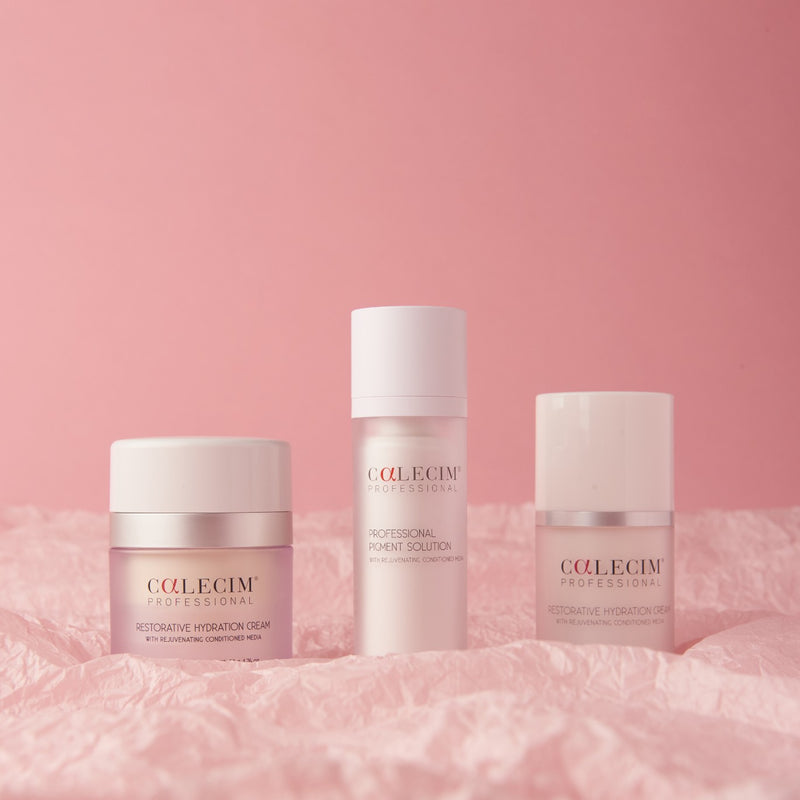
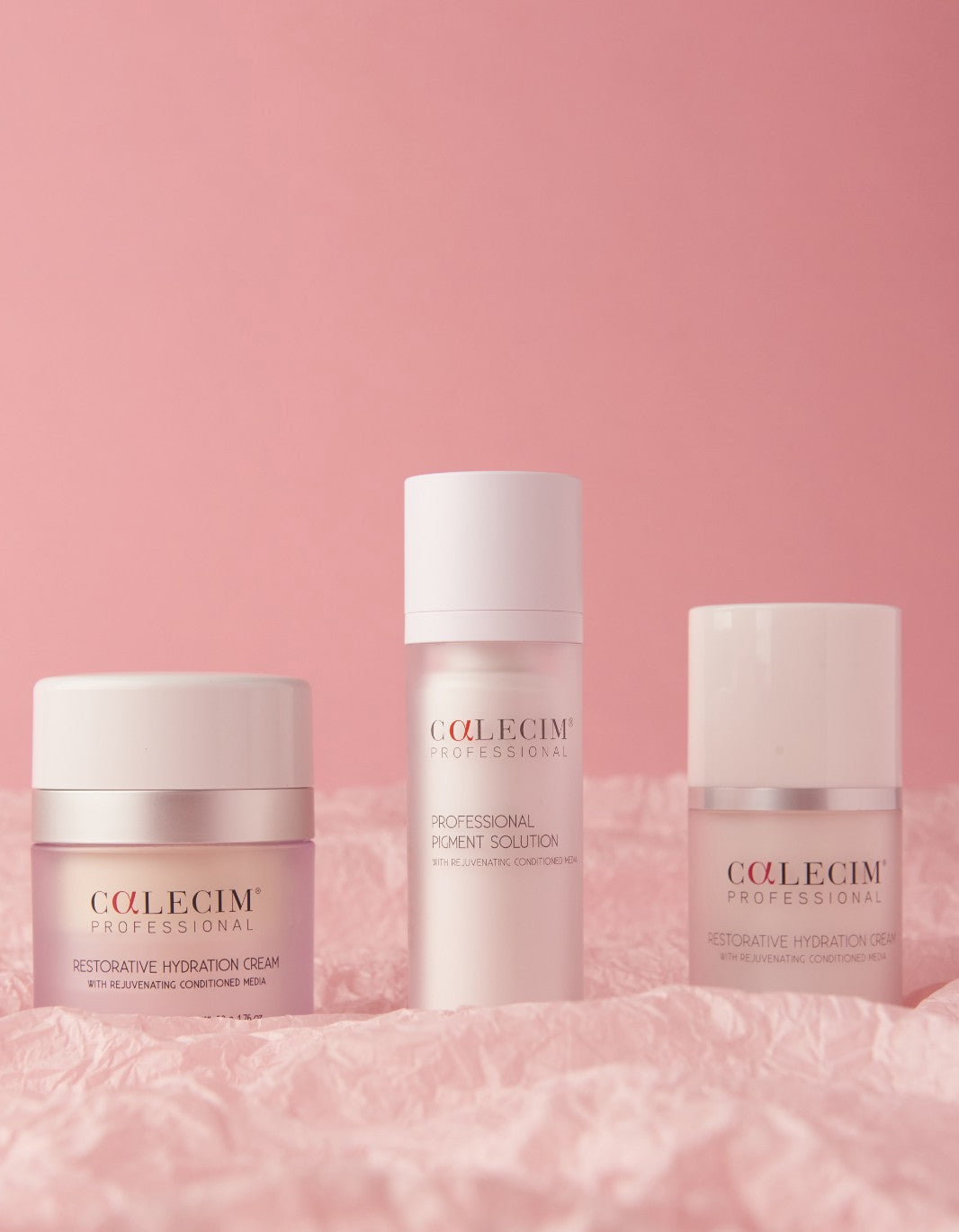
CALECIM’s Hair Serum contains PTT-6®, a proprietary blend of growth factors, cytokines and exosomal proteins used in professional and at-home hair restoration protocols. Developed from regenerative medicine research, PTT-6® helps facilitate cellular communication within the scalp and hair follicle environment.

PTT-6® has been evaluated in women experiencing menopausal and androgenetic hair loss, with findings published in the peer-reviewed PMFA Journal. These published observations, together with growing clinical use among hair restoration practitioners, have contributed to increasing interest in growth factor-based approaches for supporting healthier-looking hair growth and scalp health.

Clinical Perspectives

Dr Munir Somji founder of DrMediSpa, has discussed the growing role of growth factor technologies within modern hair restoration protocols. In his comments on menopause-related hair loss, he highlighted the appeal of regenerative approaches that aim to support scalp health and hair quality while offering a relatively non-invasive treatment option with minimal downtime.

Consultant Dermatologist Dr Sharon Wong has highlighted the importance of supporting the follicle environment when addressing thinning hair. She explains that healthy hair growth depends on maintaining a favourable environment around the follicle and that modern hair restoration approaches increasingly focus on supporting the biological processes involved in the hair growth cycle, rather than simply addressing shedding alone.

Dr Angela Tewari also discussed regenerative approaches that aim to support scalp health and hair quality through biological signalling pathways. She notes that newer treatment strategies are increasingly focused on supporting the scalp ecosystem and follicle function, helping to create the conditions required for healthier-looking hair growth.

These clinicians were interviewed by Harper’s Bazaar as part of a feature exploring menopause hair loss and emerging treatment options. Their perspectives reflect the growing recognition among dermatologists and hair restoration specialists that menopause-related hair thinning is a complex condition that often benefits from a multi-faceted approach combining lifestyle, hormonal, nutritional and targeted scalp-based interventions.

Read more

Why Consistency Matters

Hair follicles operate on growth cycles lasting several months, so improvements are usually gradual rather than dramatic. Many women first notice reduced shedding or small baby hairs before visible density changes. Because menopause-related thinning is ongoing, supporting the follicle consistently over time may matter as much as the treatment itself.

Read more Read less

Trichologist Kelly Morrell notes that many women underestimate how slowly hair grows and how long it can take to see meaningful changes in density and volume. Unlike skincare, where improvements may be visible within weeks, hair follicles operate on growth cycles that can last several months.

As new hairs emerge, they require time to grow, mature and contribute to overall scalp coverage. For this reason, improvements are often gradual rather than dramatic, with many women first noticing reduced shedding, improved hair quality or small “baby hairs” before seeing visible changes in density.

Kelly also highlights that hair restoration is rarely a one-time event. Menopause-related hair thinning is often an ongoing process influenced by hormones, genetics, stress, nutrition and overall health. Supporting the hair follicle consistently over time may therefore be just as important as the treatment itself.

In her experience, the women who achieve the most noticeable improvements are often those who remain committed to their program for several months and continue supporting their hair health even after early results begin to appear.

Read more

The Science

What Are Growth Factors?

Growth factors are naturally occurring signalling proteins involved in cellular communication, tissue repair and regeneration. They help cells send and receive instructions that influence a wide range of biological processes, including wound healing, tissue renewal and the maintenance of healthy skin and hair follicles. In the scalp, growth factors play an important role in supporting the environment surrounding.

Read more Read less

Growth factors are naturally occurring signalling proteins involved in cellular communication, tissue repair and regeneration. They help cells send and receive instructions that influence a wide range of biological processes, including wound healing, tissue renewal and the maintenance of healthy skin and hair follicles.

In the scalp, growth factors play an important role in supporting the environment surrounding the hair follicle. Hair follicles are highly active structures that rely on continuous communication between different cell types throughout the hair growth cycle. Growth factors are among the signalling molecules involved in regulating these processes.

As we age, the biological environment surrounding the hair follicle may change. Hormonal fluctuations, stress, inflammation and other factors can influence follicle function and overall hair quality. For this reason, growth factors have become an area of growing interest within regenerative medicine, aesthetic medicine and professional hair restoration.

Today, growth factors are increasingly incorporated into professional hair restoration protocols, post-procedure scalp treatments and advanced hair care formulations designed to support scalp health and healthier-looking hair growth.

Clinical Perspective

Dr Sharon Wong explains that maintaining a healthy follicular environment is an important part of supporting long-term hair health. Modern hair restoration approaches increasingly focus on creating favourable conditions around the follicle so it can continue functioning optimally throughout the hair growth cycle.

Dr Manav Bawa describes PTT-6® as a complex blend of signalling proteins designed to support scalp and follicle health. And is often combined with approaches such as microneedling and other scalp treatments that support the delivery of biologically active ingredients to the scalp.

Read more

What Is PTT-6®?

PTT-6® is CALECIM’s patented technology containing a proprietary blend of growth factors, cytokines and exosomal proteins derived from ethically sourced umbilical cord lining stem cell research. Unlike single-ingredient approaches, PTT-6® contains a broad profile of signaling molecules that work together to support communication within the scalp environment. Developed from regenerative medicine research, PTT-6® contains more than 3,000 naturally.

Read more Read less

PTT-6® is CALECIM’s patented technology containing a proprietary blend of growth factors, cytokines and exosomal proteins derived from ethically sourced umbilical cord lining stem cell research. Unlike single-ingredient approaches, PTT-6® contains a broad profile of signaling molecules that work together to support communication within the scalp environment.

Developed from regenerative medicine research, PTT-6® contains more than 3,000 naturally occurring proteins involved in cellular communication. These include growth factors, cytokines and exosomal proteins that help facilitate biological signalling within the scalp and hair follicle environment.

Hair follicles are highly active structures that depend on constant communication between surrounding cells throughout the hair growth cycle. As we age, and particularly during periods of hormonal change such as menopause, the environment surrounding the follicle may become less supportive of healthy hair growth. Technologies such as PTT-6® are designed to provide biologically active signalling molecules that help support the scalp environment and healthier-looking hair growth.

Today, PTT-6® is incorporated into professional and at-home hair restoration protocols and is used by clinicians, trichologists and consumers as part of comprehensive programmes designed to support scalp health, hair quality and overall hair appearance.

Clinical Perspective

PTT-6® has been evaluated in women experiencing menopausal and androgenetic hair loss, with findings published in the peer-reviewed PMFA Journal (Plastic, Maxillofacial and Aesthetic Journal). In the published evaluation, women using a PTT-6®-based hair restoration protocol demonstrated improvements in hair appearance, density and overall hair quality over a 12-week period.

Read more