

Learn more about at-home regenerative protocols.
Read MoreCan Regenerative Aesthetics Change how we age?

As seen in

From repairing skin to regrowing hair, could regenerative aesthetics reshape what’s possible without surgery, needles, or hair transplants.
For decades, the language of cosmetic medicine was largely mechanical: lift, fill, freeze, resurface. Now the vocabulary sounds more biological: treatments that promise to coax tissue into behaving more youthfully.
The appeal is easy to understand. Many patients still want visible change, but fewer want to look conspicuously treated. They are asking for better skin, denser hair and faster recovery rather than a wholly different face.
The field is known as regenerative aesthetic medicine. Its central idea is to activate the body's own repair signals.
"Regenerative aesthetics represents a paradigm shift from transient correction toward biologically driven tissue renewal," concluded a 2026 narrative review in Plastic and Aesthetic Research. The authors also cautioned that the category remains uneven.
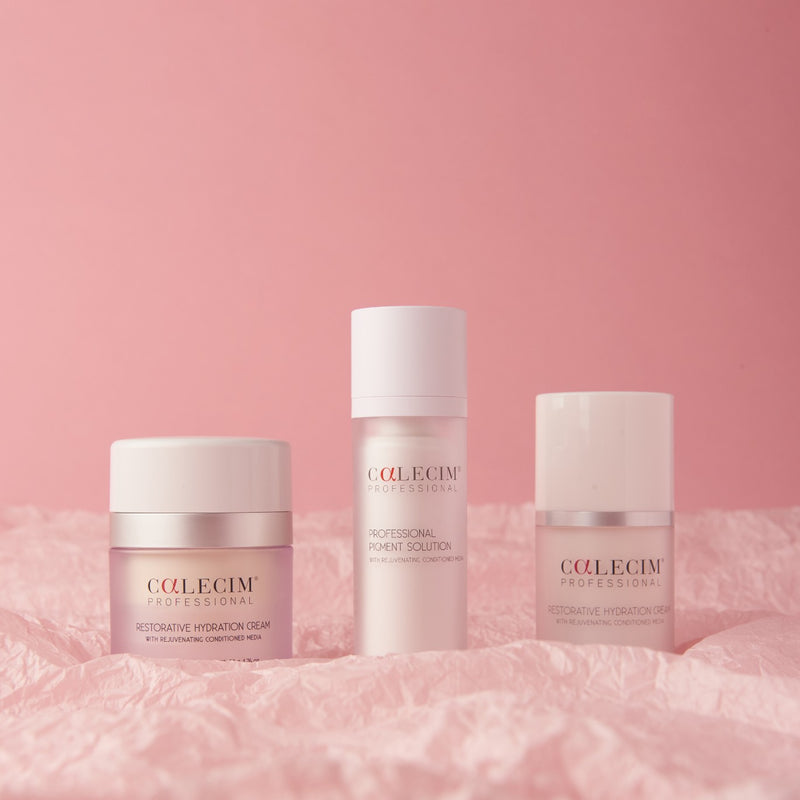
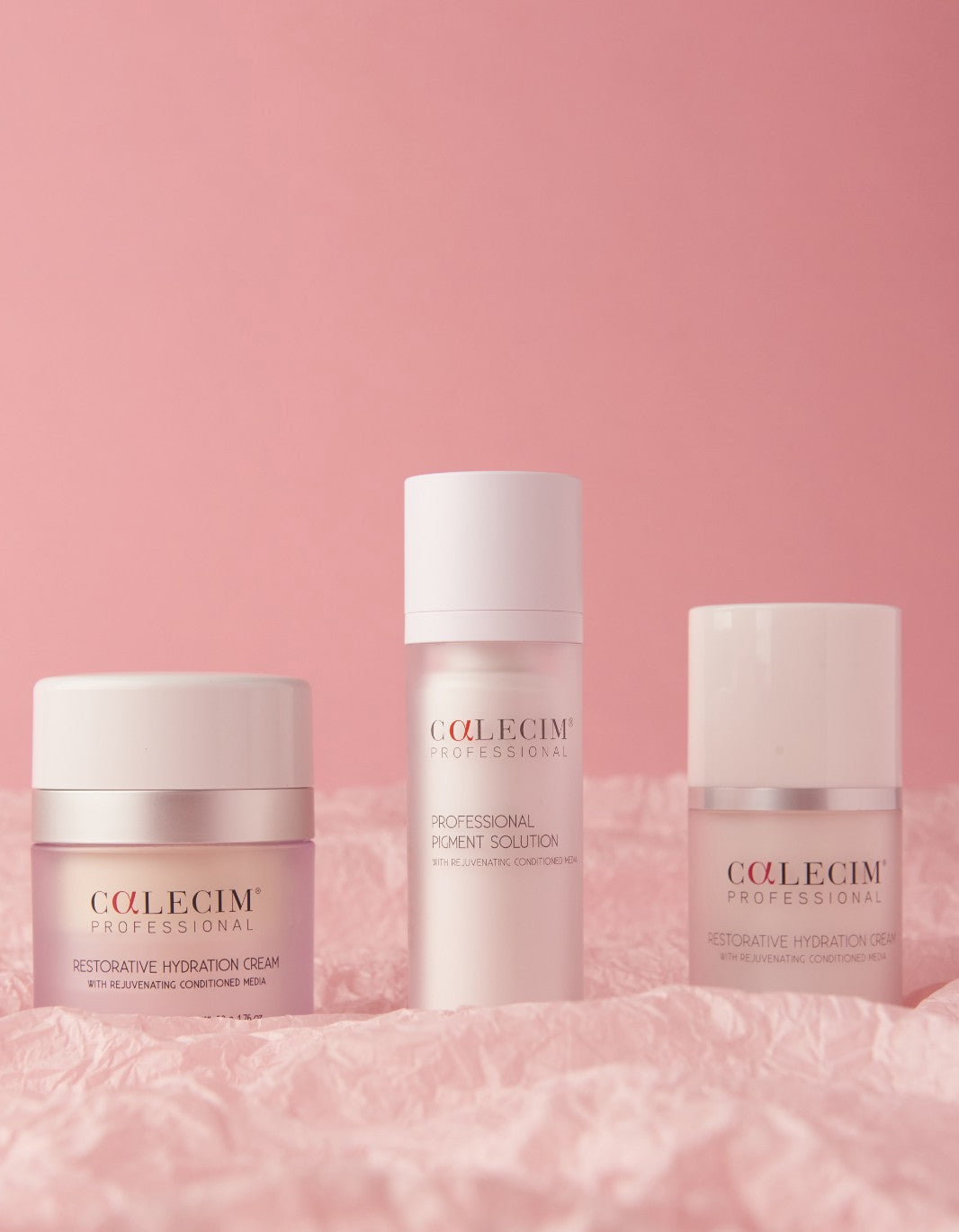
Regenerative treatments may be among the most promising developments in non-surgical aesthetics, but not every "regenerative" claim has the same evidence behind it. Calecim makes that distinction with PTT-6, a standardized stem-cell-signaling complex for skin and hair protocols.
In medicine, regeneration generally means repairing, replacing or restoring damaged cells and tissues. In aesthetics, the concept is narrower: improving skin quality, elasticity, density and hair growth by stimulating biological processes that decline with age.
A 2024 review in Cosmetics described regenerative dermatology as applying tissue-repair principles to skin rejuvenation, noting the overlap between aging, wound healing and inflammation. Aging skin is not "wounded" in the ordinary sense, but it is less efficient at repair. Collagen production slows, elastin becomes disorganized and cell-to-cell signaling weakens.
Dr. Phoebe Jones, a cosmetic physician in Australia, described the shift this way: "Traditionally, aesthetic medicine focused on correcting what we could see — adding volume, relaxing muscles or resurfacing the skin. Regenerative aesthetics is different because we're trying to improve the biology of the skin itself."
Professor Phan Toan Thang of the National University of Singapore’s Wound Healing and Stem Cell Group, puts it bluntly: "Skin ages because it becomes 'wounded' by these factors." These factors meaning the daily rigors of life such as sunlight, stress and pollution.
The best-known regenerative treatment is platelet-rich plasma, or PRP. A clinician draws a patient's blood, spins it to concentrate platelets and applies or injects the plasma into the skin or scalp. Polynucleotides, often derived from purified DNA fragments, are another fast-growing category. They are injected to improve hydration, elasticity and dermal quality. Biostimulatory fillers are also grouped under the regenerative umbrella because they prompt new collagen production.
Then there are exosomes and growth factors, perhaps the most discussed and least understood part of the market. Exosomes are tiny extracellular vesicles that carry signals between cells. Dr. Jones said the field now commonly includes "PRP, polynucleotides, exosome-based technologies, biostimulators such as PLLA and Calcium Hydroxylapatite, and stem cell secretome technologies."
But credibility depends on sourcing, formulation and evidence. A 2025 systematic review in Aesthetic Plastic Surgery found a gap in high-quality evidence and long-term safety data across much of regenerative aesthetics.
Why Calecim and PTT-6 are attracting attention
Calecim has positioned itself within the more evidence-oriented side of the regenerative beauty market. Its proprietary active ingredient, PTT-6, is described by the company as a blend of proteins, growth factors, cytokines and exosomes derived from ethically sourced cord-lining stem-cell technology. Unlike PRP, PTT-6 is presented as a standardized signaling complex used in topical skin and hair products.
Dr. Jones said PTT-6 is different from synthetic peptides or isolated signaling molecules because it is "derived from the secretions of proprietary umbilical cord lining stem cells." It "delivers a complex mixture of naturally produced biological signals," she added.
Calecim describes PTT-6 as physiologically balanced to help activate tissue renewal, and report lab findings including improved skin thickness and increased skin-cell growth. Those are company-linked claims, but they fit within a broader framework: youthful repair depends partly on the messages cells send one another.
For practitioners, the practical use is often combination therapy. Dr. Jones said one of the biggest clinical benefits she has observed is improved recovery after procedures, with patients often experiencing less redness and discomfort. In that context, growth-factor and exosome-based products can support microneedling, laser or radiofrequency treatments by controlling downtime and supporting recovery.
Non-surgical hair loss treatments and the scalp
Hair loss has become one of the clearest testing grounds for regenerative aesthetics because follicles cycle through growth, rest and shedding phases. When follicles are dormant rather than destroyed, pro-growth signaling may help push them back toward activity.
Dr. Manav Bawa, a multi-award winning cosmetic doctor in London, sees patients with aging concerns including hair loss, "Hair restoration has moved beyond simply slowing hair loss," he said. "Today we're focusing on improving the biological environment around the follicle."
Calecim's Hair Serum combines PTT-6 with microneedling-style delivery. In an article published in PMFA Journal, the system was associated with increased hair count and hair thickness after 12 weeks. Another published article points to the effects of PTT-6 exosomal proteins in menopausal and androgenetic alopecia patients, and a 60-patient case series in which regrowth and improved texture or density were reported in most patients with no adverse effects. Dr. Neil Sadick, a New York-based hair loss expert and co-author of the hair loss article, said PTT-6 was a promising development in a field where alopecia options have been limited.
The best candidates are usually not patients with complete bald patches or long-dead follicles, but those with early to moderate thinning, diffuse shedding or hormone-related changes where the follicle may still be capable of responding. That makes diagnosis important: nutritional deficiencies, thyroid disease, inflammation and medication history can all influence hair loss and should be considered before any regenerative protocol is chosen.
PRP hair treatment vs PTT-6
The distinction between PRP hair treatment and PTT-6 is partly one of source. PRP uses the patient's own blood, making it appealingly autologous but also variable. If the patient is depleted, inflamed or older, the biological material being concentrated may be less robust.
Dr. Bawa said PTT-6 is not dependent on a patient's own regenerative capacity. Because it originates from young umbilical cord lining stem cells, he said, clinicians have access to "a more standardized regenerative signal, rather than relying solely on the patient's own biology." Still, such treatments cannot revive nonviable follicles.
The credibility question
The question is how to separate serious technologies from fashionable language.
The most credible products and protocols tend to have a clear source for active ingredients, a plausible mechanism, clinical data, standardized dosing and transparent safety reporting. Calecim's strongest argument is that PTT-6 is not merely a beauty buzzword but a defined technology linked to wound-healing research, topical skin repair and hair-regeneration studies.
Even so, regenerative aesthetic medicine is still young. Reviews repeatedly call for better trials, longer follow-up and clearer regulation.
For patients, the most realistic promise may also be the most compelling: not instant transformation, but gradual improvement in tissue quality. Firmer skin, faster recovery and healthier-looking hair are quieter outcomes than a facelift or transplant.
As the market matures, the winners will be technologies that can show, with credible data, that they help aging tissue remember how to repair.

Share