Learn>Explore by Concern>Menopause Hair Loss>Why Does Menopause Cause Hair Thinning?

Why Does Menopause Cause Hair Thinning?

During menopause, estrogen levels decline. This can shorten the hair growth phase and increase the proportion of follicles in the resting and shedding phases.

Hair follicles may also become more sensitive to androgens, contributing to gradual thinning and miniaturization.

Hair growth is heavily influenced by hormones, and estrogen is thought to play an important role in helping maintain the normal hair growth cycle. During the reproductive years, estrogen may help support longer growth phases and contribute to fuller, thicker-looking hair. As estrogen and progesterone levels decline during perimenopause and menopause, this balance begins to change.

One consequence is that hairs may spend less time actively growing and more time in the resting and shedding phases of the hair cycle. At the same time, some follicles may gradually become smaller and produce finer hairs with each successive growth cycle — a process known as follicle miniaturisation.

Hormonal changes can also increase the relative influence of androgens, including dihydrotestosterone (DHT), on genetically susceptible follicles. This may contribute to the gradual reduction in hair density commonly seen in female pattern hair loss.

As a result, many women notice changes such as:

  • Increased hair shedding
  • Reduced overall volume
  • A widening centre part
  • Increased scalp visibility
  • A thinner ponytail
  • Hair that feels finer or more fragile
  • Hair that no longer grows as long or as thick as it once did

Clinical Perspective

According to Dr Manav Bawa, menopause-related thinning is often the result of both hormonal changes and increased follicle sensitivity to androgens. Over time, this may contribute to progressive miniaturization where hairs grow back finer and shorter than before.

Your Questions Answered

General guidance to help you understand common hair-change experiences. It is not a substitute for medical advice.
What Are The Early Signs Of Menopause Hair Loss?

Common signs include:

  • Increased shedding
  • Reduced volume
  • A widening centre part
  • Increased scalp visibility
  • Reduced ponytail thickness
  • Slower regrowth
  • Finer hair texture

Many women begin noticing these changes during perimenopause, before menopause itself.

What Is The Difference Between Hair Shedding And Hair Thinning?

Hair shedding refers to increased hair fall. Hair thinning refers to a gradual reduction in hair density and follicle size.

Many women experiencing menopause-related hair loss experience both.

Hair shedding occurs when a greater number of hairs than usual enter the resting and shedding phases of the hair growth cycle. Women may notice more hair on their pillow, in the shower drain, on their hairbrush or on their clothing. Shedding can occur suddenly and is often triggered by factors such as hormonal changes, illness, significant stress, nutritional deficiencies, rapid weight loss or certain medications.

Hair thinning is different. Rather than losing more hairs than normal, the hair follicles themselves gradually produce finer, weaker and shorter hairs. Over time, this process—known as follicle miniaturisation—can reduce overall hair density and make the scalp more visible, particularly around the centre parting, crown and temples.

Many women experiencing menopause-related hair loss notice both processes occurring simultaneously. Increased shedding may make the hair feel noticeably thinner in the short term, while ongoing miniaturization can gradually reduce density over months or years.

Can Menopausal Hair Loss Grow Back?

The answer depends on the underlying cause.

Temporary shedding may improve once the trigger is addressed. Where follicle miniaturization has occurred, earlier intervention is often associated with better outcomes.

Treatment approaches may include addressing nutritional deficiencies, supporting scalp health, managing underlying health conditions and using hair restoration therapies designed to support healthier-looking hair growth.

Because hair grows slowly, consistency is important and visible improvements typically require several months.

What Treatments Are Available For Menopause Hair Loss?

Treatment approaches may include:

  • Lifestyle optimization
  • Nutritional support
  • HRT where appropriate
  • Topical minoxidil
  • Professional hair restoration treatments
  • Growth factor-based therapies

Menopause Hair Loss Treatment with Stem Cell Serum PTT-6®

Professional hair restoration protocols may include growth factor-based treatments designed to support the scalp environment and encourage healthier-looking hair.

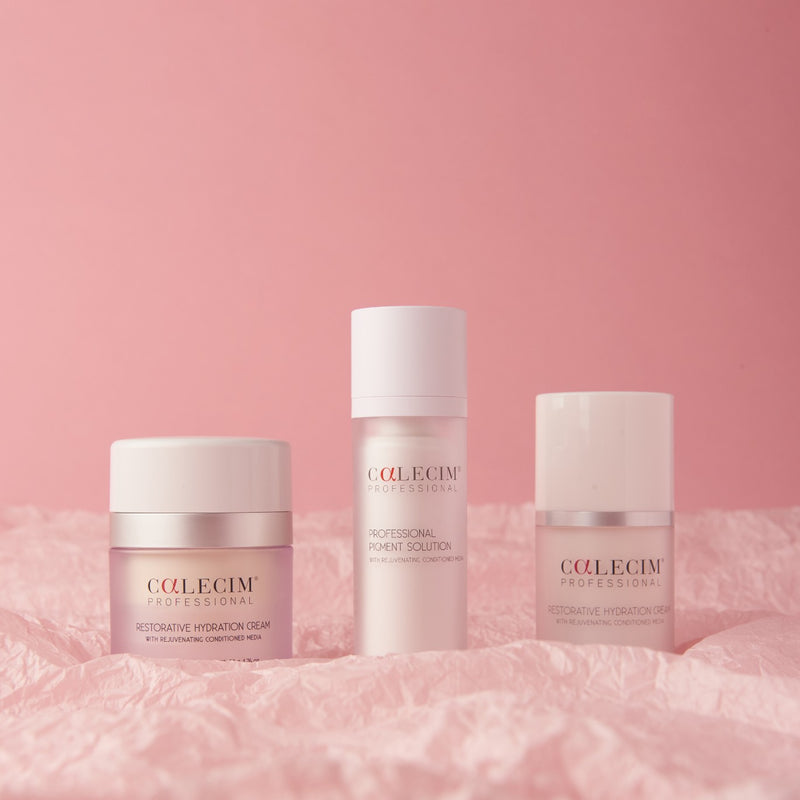
CALECIM’s Hair Serum contains PTT-6®, a proprietary blend of growth factors, cytokines and exosomal proteins used in professional and at-home hair restoration protocols. Developed from regenerative medicine research, PTT-6® helps facilitate cellular communication within the scalp and hair follicle environment.

PTT-6® has been evaluated in women experiencing menopausal and androgenetic hair loss, with findings published in the peer-reviewed PMFA Journal. These published observations, together with growing clinical use among hair restoration practitioners, have contributed to increasing interest in growth factor-based approaches for supporting healthier-looking hair growth and scalp health.