

Hair loss in menopause? Here’s exactly how to tackle it
It’s one of the lesser discussed symptoms but hair loss in menopause is a problem for so many women. Help is at hand though – here’s how to treat it at home, in clinic and at the salon

As seen in

Now that the conversation around menopause has opened up, everyone from your school run mum friends to your boss is talking about their brain fog and hot flushes. But one big midlife elephant in the room is rarely discussed – hair loss. If you’ve noticed more hair coming away on your brush, or it feels thin and limp when tied up, you’re not alone. Up to 60% of women struggle with hair loss, particularly in midlife.
What causes menopausal hair loss?
“Hormonal changes during menopause can significantly impact hair growth,” says Dr Manav Bawa, a cosmetic doctor who’s treated many midlife women suffering from hair loss at his London clinic.
“Oestrogen and progesterone promote hair growth and density. During menopause, their levels decline, causing hair to thin and grow more slowly. As oestrogen and progesterone decrease, androgens (male hormones, like testosterone) can become more dominant. Dihydrotestosterone (DHT), a potent androgen, weakens hair follicles, leading to hair loss.”
You might be surprised to know that testosterone can contribute to hair loss, but Dr Bawa says the effects are complex. “Testosterone itself can support hair growth, but it is converted into DHT, which can shrink hair follicles and lead to hair loss.”
It’s not that your body creates more testosterone during menopause; in fact, it drops off slightly. But, Dr Bawa explains, “the relative increase in testosterone, due to the decline in oestrogen and progesterone, is what leads to higher levels of DHT. This can cause hair follicles to get smaller, resulting in thinner, weaker hair.”
In midlife, hormonal changes might be the main driver, but it’s likely to be a combination of factors at this time of life. “Other health issues can contribute to hair thinning,” he says, “so it’s important to discuss excessive hair shedding with a healthcare provider to rule out any other conditions.”
It can be hereditary – female pattern hair loss (FPHL). Or it can happen due to stress, known as telogen effluvium, which is when stressors keep more hairs than usual in the telogen (resting) phase.
Or you may have been through a medical treatment that exacerbated it. I had chemotherapy for breast cancer in 2021 when I was 40 and, although my hair grew back, it was never the same. Chemo caused early menopause, so the accompanying hormonal changes detailed above meant my post-chemo regrowth was thinner than my pre-cancer hair.

How to reduce hair loss in peri/menopause
HRT can help, by restoring the balance of oestrogen and progesterone. But not all women respond to HRT in the same way, and some can’t or prefer not to take it at all. The good news is there is plenty that you can do in terms of lifestyle, such as finding ways to manage stress. Eat well, including lots of nutrient-dense vegetables and healthy protein. “Eggs are hands-down the best thing you can eat for your hair,” says Davina McCall’s hairdresser boyfriend, Michael Douglas. They contain protein and biotin – peanuts, edamame, tofu, sunflower seeds, almonds and sweet potatoes also contain both.
Here’s what else you can do in clinic, in the hair salon or at home.
Clinical treatments for menopausal hair loss
The stem cell serum that’s available nationwide
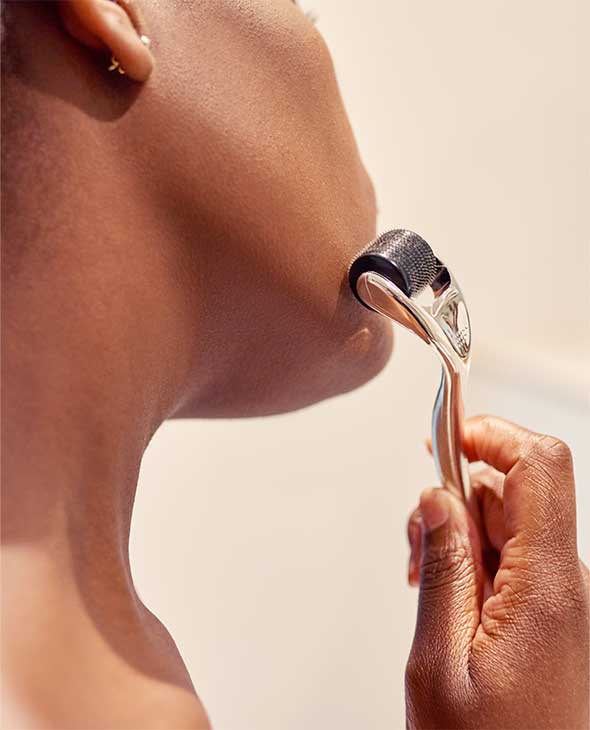
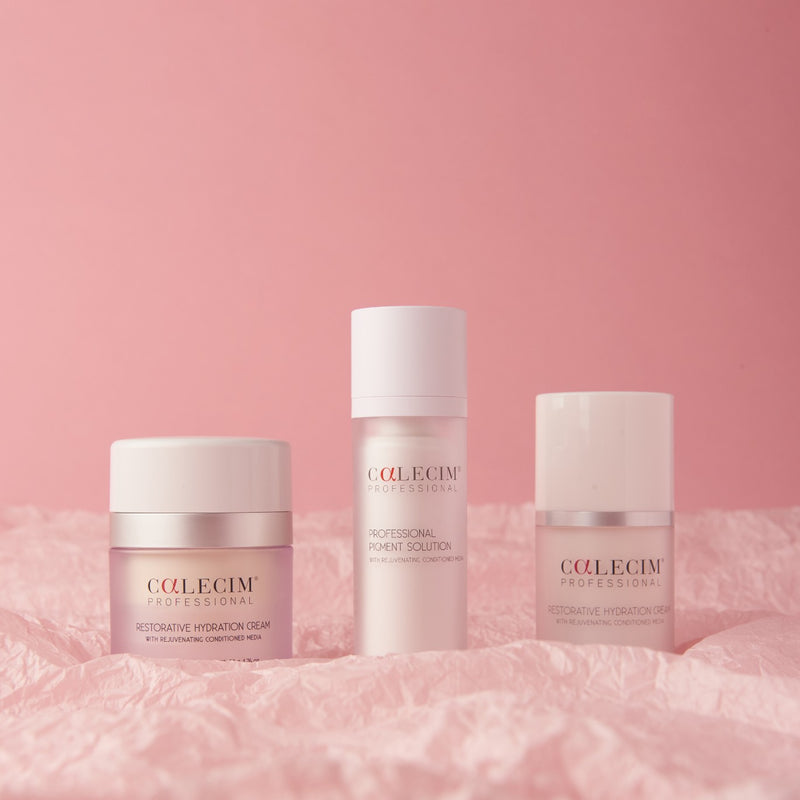
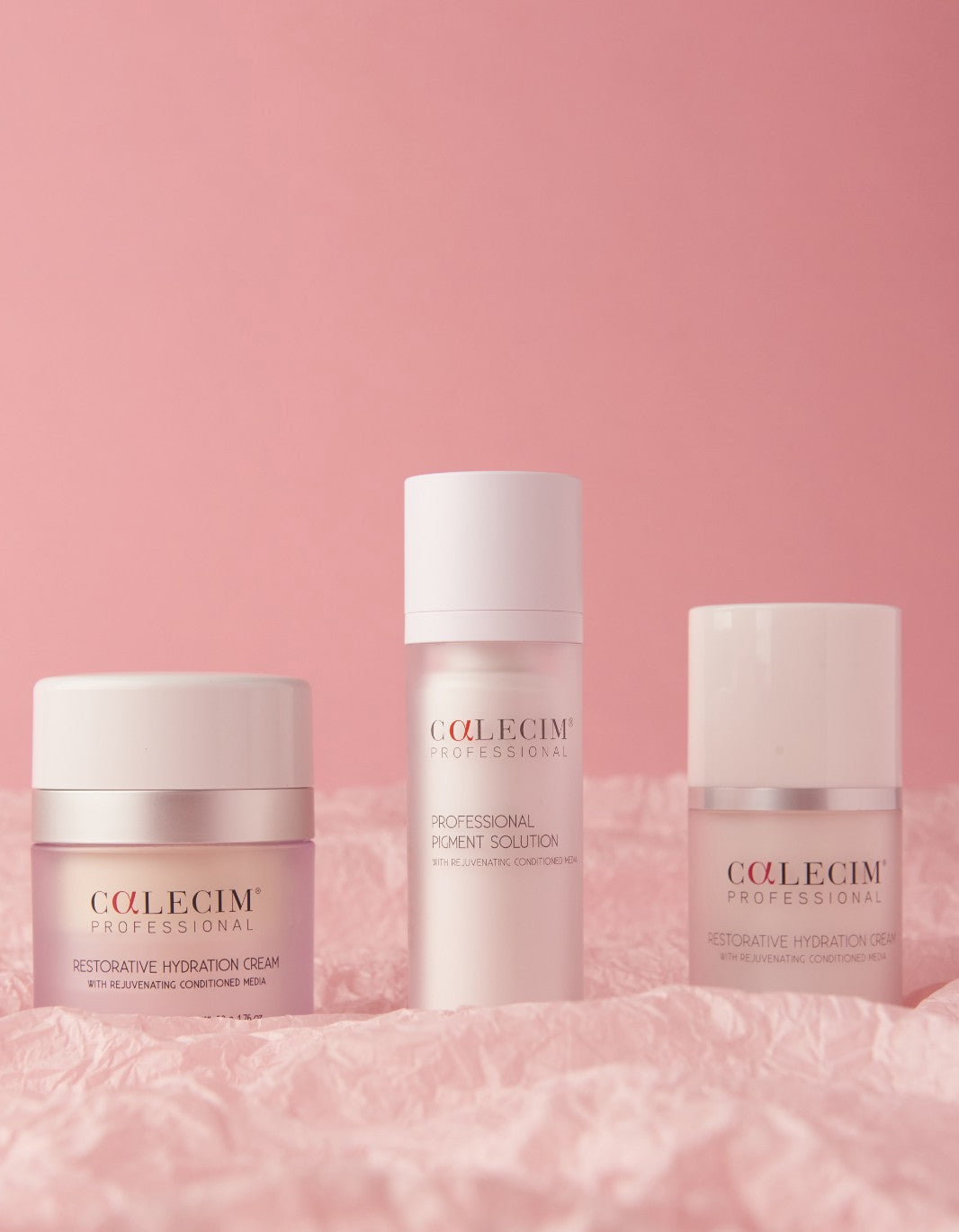
Calecim is a serum containing growth factors, cytokines and proteins derived from stem cells from the umbilical cord lining of red deer. It’s used in conjunction with a “derma stamp activator” which microneedles the scalp to enhance delivery of the serum, while also stimulating follicles to regenerate. Many clinics nationwide offer Calecim treatments, but Dr Bawa was surprised at the lack of evidence behind it so ran his own study. He recruited 12 women and monitored their progress as they had two Calecim treatments in clinic, and self-administered ten more weekly sessions at home. “By week 12, the eight participants who completed the study all observed measurable changes in their hair’s density, strength, and texture,” he says. His Time Clinic offers a 6-week course for £1,010 (or £1,410 with Dr Bawa himself). Or find your nearest Calecim Professional clinic using their online Pro Directory. You can also buy Calecim to self-administer at home. It costs £295 for a 6-week programme.

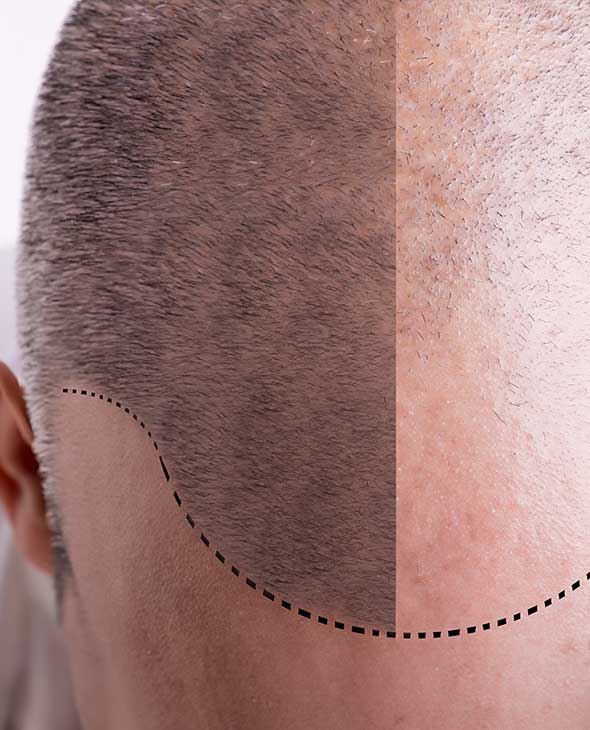
Impressive regrowth results: one of Dr Bawa’s patients before (left) and after (right) his Calecim treatment programme
The hair-growth jabs
Polynucleotides are sourced from salmon or trout DNA, and injected directly into your scalp. “They amplify processes that the body does naturally – increasing blood supply and providing growth factors,” explains dermatologist Dr Angela Tewari. “It makes the tissues work better, so the hair follicles can be at their optimum.” Monthly treatments of polynucleotides may give you up to a 15 per cent increase in scalp hair density in four to six months. In addition, individual hairs may be thicker, as the shaft diameter can increase by 15 per cent, according to research in the Archives of Dermatology 2025.
Dr Tewari advises treatments every four to six weeks for the first three, and then every eight to 12 weeks. It costs £300 per treatment with Dr Tewari at dermatologystudios.co.uk.
The one that doesn’t involve needles
If the idea of injections into your scalp makes you squirm, then Tricopat might be for you. “It’s a way of delivering growth factors to the follicle without needles,” explains Dr Sharon Wong, a consultant dermatologist specialising in scalp health, who offers the treatment at her south London clinic. “The probe uses firm, rhythmic patting onto the scalp, creating tiny dermo incisions.” It doesn’t hurt, although Dr Wong admits “it can feel a bit intense around the temples”. Then the serum, containing lab-made peptides and growth factors, is applied to keep the hair growth cycle running smoothly. Perfect for vegans or anyone squeamish about deer umbilical cord proteins. Dr Wong combines it with red light therapy to improve circulation and optimise scalp health. One session per month for four months is recommended, followed by booster sessions every three months to maintain results. A single session is £395, and a course of four sessions is £1,580.
At home treatments for menopausal hair loss
The over-the-counter boosting scalp drops
The only UK licensed medication for hair loss is minoxidil, which increases the blood supply to follicles, extending the growth phase of the hair. Dr Wong describes it as “the cornerstone of most hair loss treatments”. A topical solution that sometimes comes as a foam or spray, it’s widely available without a prescription. Some find it causes more shedding before the regrowth phase, so things can start to look worse before they get better. Think of it like retinol; it may initially cause dryness but, ultimately, it’s one of the best tools in your skincare arsenal.
While minoxidil alone does not address hormonal factors, it still helps by increasing blood flow and targeting the non-hormonal causes that are likely also contributing. But Dr Wong’s Dose F2 is formulated with 6% minoxidil, as well as melatonin to protect follicles from oxidative stress, finasteride to reduce DHT (the male hormone linked to follicle miniaturisation), and oestradiol and medroxyprogesterone to rebalance hormones. You apply it daily and it’s £29.99 for a month’s supply.
The supplement solution
Targeted supplements can work wonders, since we become less efficient at absorbing nutrients from food during menopause and beyond. Hannah Phillips is co-founder of Bangs in East London, the salon that nurtured my chemo-frazzled regrowth back to life. “Supplements like biotin and collagen can support overall hair health from the inside out,” says Phillips. These are well tolerated and worth giving a go, although a lack of other nutrients may be a factor – but how do you know if you have a deficiency? Superdrug has launched the UK’s first high street test to measure hair health nutrients. “It focuses on key biomarkers shown to play an important role in hair growth and strength,” says Niamh McMillan, Superdrug’s Pharmacy Superintendent. “These include ferritin, iron, vitamin D, vitamin B12 and folate — nutrients that support healthy follicles and can be improved through diet or supplementation if found to be low.” The Hair Health test requires popping in store for a blood test, and costs £99 – book it online at your nearest Superdrug Health Clinic.
The high-tech growth-booster hats
Red light masks are hugely popular for skin, but now benefits are being seen in hair health. Interestingly, not only do they increase blood flow and stimulate the follicles, but they may also decrease dihydrotestosterone (DHT) levels, reducing hair loss. The Hairmax Laserband 41 Comfortflex, £599.99, is FDA-cleared to treat androgenetic alopecia in men and women. And our editorial director Victoria Woodhall is a fan of Bon Charge’s red light cap (£349), which uses both red and near infrared light, and is very discreet. She has also tried the Higherdose red light hat (£399.99) and was suitably impressed: “No one would know that underneath this baseball cap are 120 LEDs delivering a dose of 650nm red light (the optimum wavelength for hair growth, according to studies – skin is 630-660nm),” she says. “By boosting circulation and reducing inflammation, it provides a better environment for hair growth.”

If the hat fits: Victoria and her Higherdose LED cap
Hair salon solutions for menopausal hair loss
The professional red light therapy
Getting your LED fix in salon comes with the added benefits of professional-grade equipment, of higher power and efficacy, and expert, customised care. Try The Light Salon, which has opened the first dedicated LED Face & Hair Bar at Selfridges London. Expect around 630–660 nm of red light therapy combined with scalp massage to stimulate circulation and encourage healthy growth. You can also add on microneedling with a stem cell serum. The Hair Revitaliser treatment includes red light and massage and costs £75, or £150 for a three-treatment package. The Advanced Renewal treatment with microneedling is £240, or £480 for three.
The hair-protecting extensions
Extensions can be a hair-saver but find a practitioner you trust to avoid damage. “Bond extensions (where individual strands are attached to small sections of your natural hair using a heat-activated keratin-based adhesive) are an immediate way to treat thinning hair with natural looking results,” says hair extension expert Hadley Yates. “I create thickness using my signature ‘filler method’, cutting extensions down into super fine pieces, then spreading them across the hair. I never attach hair that’s heavier than what’s already there.” He has also created hair filler clip-ins for anyone who prefers something they can take in and out.
The brittle hair repairer
It’s not just shedding that’s an issue in midlife, but also brittle hair due to dryness, which can easily break, making it appear thinner. Hannah Phillips of Bangs suggests asking your hairdresser about a bonding treatment – her favourite is by Uberliss. “It’s ideal for mature hair,” she says, “since not only repairs the hair from within, but completely seals the outer cuticle, leaving the hair with a silky smooth finish.” This makes dry menopausal hair appear healthier and shinier. As for a particular style that will create the illusion of thicker hair? If your hairline is receding then a long side-swept fringe can help disguise it but, for most menopausal women, the issue is more overall thinning and breakage. “If your hair tends to get wispy toward the ends, then a bob is a great way to add weight,” says Phillips. “It can be tailored to a variety of lengths, and creates a fuller shape.”
The nourishing massage
Don’t underestimate the power of massage – not only for stimulating the scalp, but also for relaxing your nervous system, reducing overall inflammation. Jenya Di Pierro is a naturopath, herbalist and founder of the Cloud Twelve wellness centre in Notting Hill. “Our Head Spa treatment combines analysis, detoxification and stimulation to nourish follicles, boost circulation and create the ideal environment for stronger, healthier hair,” she says.
Di Pierro insists that we can all have a healthy head of hair, in midlife and beyond. “By focusing on nutrition, stress management and gentle scalp stimulation, you can support hair growth, maintain thickness, and improve overall hair quality,” she says. “With a holistic approach, midlife hair challenges can be managed naturally, empowering you to preserve healthy, resilient hair as you age.”
The bespoke Head Spa treatment last 70 minutes and costs £190.