

Have We Been Looking at Eye Aging All Wrong?
As scientists learn more about how the eye area ages, new research suggests that improving skin elasticity—not just collagen—may hold the key to maintaining a firmer eye contour.

For many women, the first visible signs of aging don't appear around the mouth or forehead. They begin with the eyes.
Mascara starts catching on heavier upper lids. Eyeliner becomes harder to apply. Eyes that once looked bright and open begin to appear more tired, even after a good night's sleep. For some, these subtle changes eventually lead to a bigger question: Is surgery the only way to treat hooded eyelids?
Upper eyelid hooding is one of the most common concerns associated with facial aging, yet it is often misunderstood. While genetics certainly play a role, the gradual drooping of the upper eyelids isn't simply caused by "loose skin." It reflects a series of structural changes taking place beneath the surface, many of which begin years before hooding becomes noticeable.
For decades, collagen has dominated the conversation around skin aging. Increasingly, however, scientists are turning their attention to another structural protein that may be just as important for maintaining the appearance of the eye area: elastin.
Unlike collagen, which gives skin its strength, elastin allows skin to stretch and return to its original position. It is what helps younger skin maintain its firmness and resilience through thousands of blinks and facial expressions every day. As elastin declines with age, the delicate skin around the eyes becomes less able to bounce back, contributing to a gradual loss of definition and the development of heavier-looking upper eyelids.
That process is particularly noticeable around the eyes. Eyelid skin is around four times thinner than the skin on the rest of the face, contains fewer oil glands, and is subjected to constant movement throughout the day. Combined with ultraviolet exposure, environmental stressors, and the natural slowing of the skin's repair processes, it helps explain why the eye area is often the first place to reveal visible signs of aging.
Today, researchers are asking a different question. Rather than focusing solely on reducing wrinkles once they appear, could supporting the skin's underlying elasticity help preserve a firmer, more youthful-looking eye contour for longer?


Why the Eye Area Ages Differently
The skin surrounding the eyes works harder than almost any other area of the face. Every blink, smile, squint, and expression places repeated mechanical stress on tissue that is already naturally thinner and more delicate.
As we age, the skin's repair mechanisms gradually become less efficient. Fibroblasts—the cells responsible for producing collagen, elastin, and hyaluronic acid—become less active, leading to a decline in the structural proteins that help keep skin firm, resilient, and hydrated.
While collagen provides strength, elastin gives skin its flexibility and ability to spring back after movement. Hyaluronic acid helps maintain hydration and volume. Together, these components create the structural support that allows the eyelids to appear smooth, firm, and well-defined.
As their production slows, skin becomes less resilient. Fine lines become more noticeable, the upper eyelids may begin to feel heavier, and the eye contour gradually loses its youthful definition.
Looking Beyond the Under-Eye
According to ophthalmic surgeon Dr. Julia Sen, aging around the eyes should never be viewed as simply an under-eye concern.
She notes that loss of volume from the temples can contribute to upper lid hooding, highlighting the importance of supporting the entire eye contour rather than focusing on a single area.
"The eye area functions as one connected structure," she explains. "Changes in one area can influence the appearance of another."
Dr. Sen also notes that ingredients capable of supporting collagen and elastin production while improving microcirculation may help improve skin texture, elasticity, and the appearance of puffiness over time.
Rather than creating an artificial lifting effect, the goal is to improve the overall quality of the skin so the entire eye area appears healthier, firmer, and more refreshed.
A Different Approach to Eye Aging
Rather than attempting to temporarily tighten the skin or camouflage visible changes, researchers are increasingly investigating ways to support the skin's own repair mechanisms.
One technology attracting scientific interest is PTT-6®, a proprietary signaling complex derived from ethically sourced red deer umbilical cord lining stem cells.
Importantly, the finished skincare product does not contain living stem cells.
Instead, PTT-6® contains naturally occurring proteins, growth factors, cytokines, and exosomes released by those stem cells. These signaling molecules help facilitate communication between skin cells and are being investigated for their ability to support healthier skin function.
Instead of replacing damaged tissue, the goal is to encourage the skin to function more like younger skin.
What the Research Shows
To better understand whether this approach could benefit one of the face's most delicate areas, researchers published a study in Dermatologic Surgery focusing specifically on human eyelid fibroblasts.
Rather than studying facial skin in general, they chose fibroblasts taken directly from eyelid tissue—one of the most challenging areas to treat because of its thin, fragile structure.
When exposed to PTT-6® in laboratory testing, these fibroblasts produced:
- 68% more elastin
-
113% more hyaluronic acid
Researchers then evaluated an eye cream formulated with PTT-6® in a small clinical case series.
After five weeks of consistent use, both participants and investigators reported visible improvements in eyelid laxity, skin texture, and the appearance of eye bags. Most participants also demonstrated improvements in fine lines and wrinkles.
While the study was exploratory and larger clinical trials are still needed, the findings suggest that supporting the skin's underlying biology may translate into visible improvements in one of the face's most difficult areas to treat.
From Laboratory Research to Daily Skincare
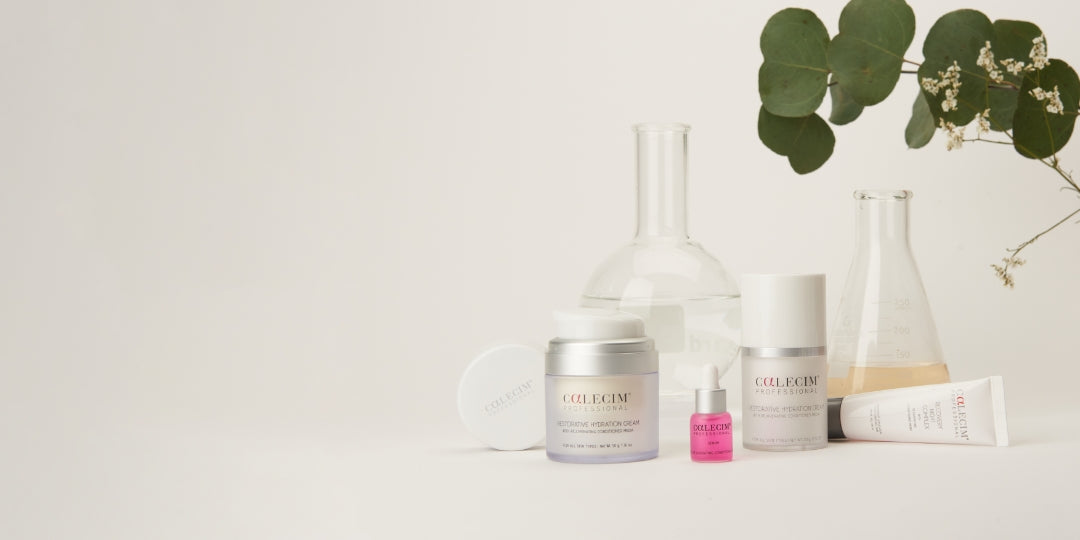
The published research has informed the development of CALECIM® Eye Contour Lifting Cream, which was designed to be applied not only beneath the eyes, but also across the upper eyelids and temples.
This broader application reflects a growing understanding that eye aging affects the entire eye contour rather than a single isolated area.
Instead of focusing on one visible concern, the formulation is designed to support overall skin quality by helping improve elasticity, hydration, and the structural integrity of the skin over time.
The emphasis is not on creating an immediate cosmetic effect, but on supporting healthier, more resilient skin through continued use.
A New Way of Thinking About Eye Hooding
For years, conversations about aging around the eyes have centered on wrinkles.
Emerging research suggests the story may be more complex.
As scientists continue to better understand the role of elastin, fibroblasts, and the skin's natural repair processes, the focus is beginning to shift from simply correcting visible signs of aging to supporting the biological structures that help maintain firmer, healthier-looking skin.
For people concerned about upper eyelid hooding, this represents an encouraging new direction.
Rather than asking how to disguise the visible signs of aging, researchers are increasingly exploring whether improving skin quality itself may help preserve a firmer, more defined eye contour over time.