The popularity of at-home microneedling devices has grown significantly in recent years, offering consumers access to treatments that were once available only in clinics. While at-home devices can play a role in certain skincare and haircare routines, they differ substantially from professional microneedling procedures in both design and treatment depth.
Understanding these differences is important for setting realistic expectations and ensuring safe use.
How At-Home Microneedling Differs From Professional Treatments
Although both professional and at-home microneedling rely on the same basic principle of creating controlled microchannels within the skin, there are important differences in device design, needle depth and treatment objectives.
Professional microneedling treatments are performed using medical-grade devices operated by trained practitioners. These devices allow the needle depth to be adjusted according to the treatment area, skin thickness and clinical concern being addressed.
For example, deeper treatments may be used for:
- Acne scars
- Surgical scars
- Stretch marks
- Advanced photoaging
Shallower treatments may be selected for:
- General skin rejuvenation
- Fine lines
- Delicate areas of the face
Because practitioners can customize needle depth and treatment intensity, professional microneedling is capable of addressing a wider range of concerns and often produces more significant clinical outcomes.
At-home devices, by contrast, are typically designed for maintenance and ongoing support rather than intensive corrective treatment.
Most home-use devices utilize shorter needles and are intended to be used more regularly as part of a skincare or scalp-care routine. The goal is generally to support product penetration and provide gentle stimulation rather than aggressively remodel tissue.
What Needle Length Is Recommended for At-Home Use?
The appropriate needle length depends on the treatment area and the manufacturer’s instructions.
For facial treatments, many experts recommend staying within the range of approximately 0.2 mm to 0.5 mm for home use.
These shorter needle lengths are generally intended to:
- Enhance the absorption of topical products
- Support gentle skin renewal
- Minimize downtime
- Reduce the risk of injury
Longer needle lengths are typically reserved for trained professionals.
For scalp treatments, 0.5 mm is one of the most commonly used depths in home-care protocols and is the depth incorporated into the CALECIM® Hair Serum protocol.
The objective is to create controlled microchannels within the scalp while maintaining a favorable safety profile for regular use.
Why Deeper Is Not Necessarily Better
One of the most common misconceptions about microneedling is that deeper needles automatically produce better results.
In reality, treatment depth should be matched to the clinical objective.
Excessively aggressive treatment may increase:
- Irritation
- Redness
- Inflammation
- Recovery time
- Risk of complications
For this reason, many practitioners advocate a consistent, protocol-driven approach rather than simply using the longest needles available.
Potential Benefits of At-Home Microneedling
Depending on the device and protocol used, at-home microneedling may help support:
- Skin texture
- Product penetration
- Scalp care routines
- Ongoing maintenance between professional treatments
Many practitioners recommend home-care protocols as part of a broader treatment strategy rather than as a replacement for professional assessment and treatment.
Safety Considerations
At-home microneedling should always be performed according to manufacturer instructions and under appropriate hygienic conditions.
Users should:
- Ensure devices are clean before use
- Avoid sharing devices
- Replace devices as recommended
- Follow product-specific instructions
- Avoid excessive treatment frequency
Aggressive treatment does not necessarily produce better results and may increase the risk of irritation.
When You Should Avoid At-Home Microneedling
At-home microneedling should generally be avoided on areas affected by:
- Active acne
- Skin infections
- Open wounds
- Eczema flares
- Psoriasis flares
- Significant inflammation
Individuals with underlying medical conditions affecting wound healing should seek professional advice before treatment.
Hair Restoration and At-Home Microneedling
At-home microneedling has become particularly popular within hair restoration.
Some protocols incorporate a derma stamp alongside topical hair products as a way of maintaining scalp stimulation between in-clinic appointments.
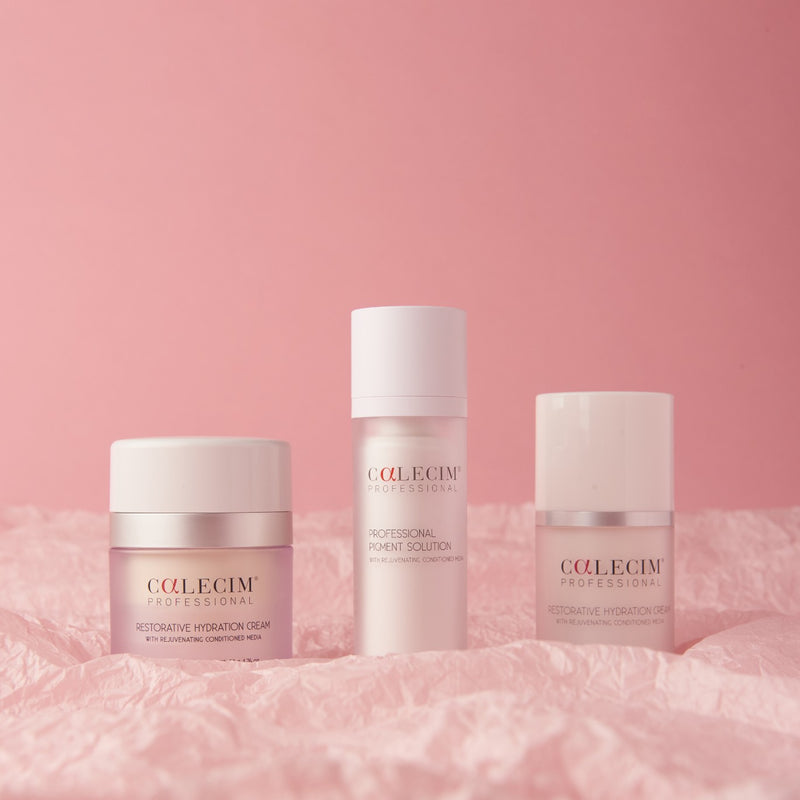
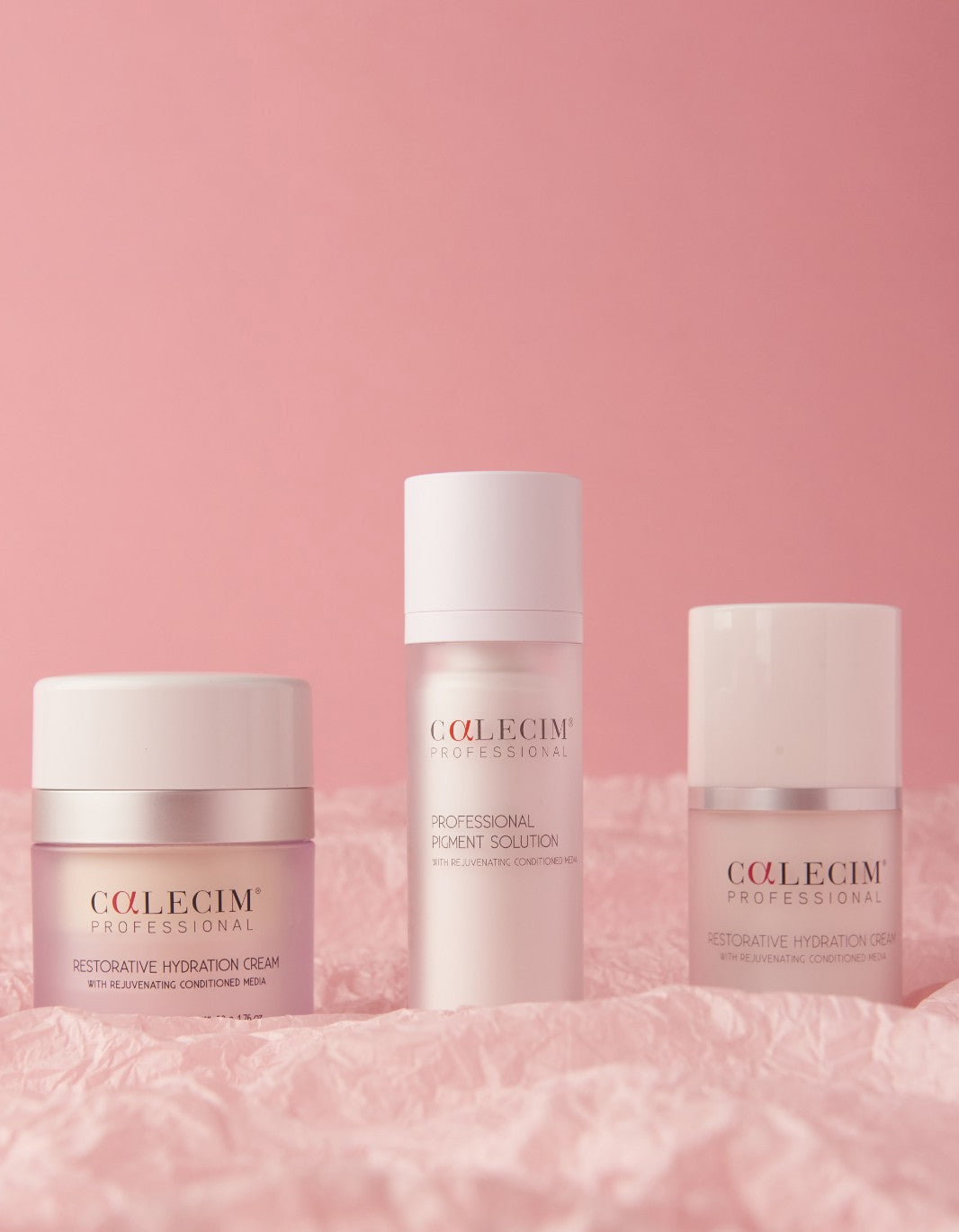
How CALECIM® Incorporates At-Home Microneedling
The CALECIM® Hair Serum treatment protocol includes a medical-grade derma stamp designed specifically for scalp use.
The protocol combines controlled scalp stimulation with the application of CALECIM® Hair Serum, allowing users to enjoy the ability to continue scalp stimulation and serum application between professional treatments. Though it does not replace professional assessment and treatment, it is a good alternative for less severe forms of hair loss.
Trichologist Perspective
At The Hannah Gaboardi Clinic, patients undergoing hair restoration treatment are provided with a tailored home-care protocol designed to complement their in-clinic sessions.
According to Hannah Gaboardi:
“By combining in-clinic treatments with at-home care, we are able to keep supporting the follicle week after week. It gives patients a way to stay actively involved in their own hair recovery journey.”
This approach reflects a broader trend within hair restoration, where consistency and long-term maintenance are often considered important components of treatment success.





.jpg?v=1746528011060)


.jpg?v=1758189187340)