

Is swelling normal after a hair transplant, and how can I reduce it?
Postoperative swelling usually peaks within the first few days and improves within a week. This topic explains why it happens, how to manage it safely, what to avoid and when severe or persistent swelling needs medical assessment.
Yes. Mild to moderate swelling is a common part of early hair transplant recovery, particularly after a large procedure or transplantation along the frontal hairline.
Swelling typically begins within the first one to two days, peaks around days two to three and improves by days five to seven. It may start in the forehead and move downward toward the eyebrows or eyelids before resolving.
Although the appearance can be concerning, uncomplicated postoperative swelling is usually temporary and does not mean that the grafts have been damaged.
Why does swelling occur after a hair transplant?
Hair transplantation creates thousands of small surgical sites in the donor and recipient areas. The procedure also commonly involves the injection of local anesthetic and a fluid solution used to help control bleeding and prepare the scalp.
As the body begins healing, fluid and inflammatory mediators collect within the treated tissues. Gravity can cause some of this fluid to move from the scalp into the forehead and around the eyes.
The amount of swelling varies between patients. Factors that may influence it include:
- The number of grafts transplanted
- The size and duration of the procedure
- Dense implantation in the frontal scalp
- The volume of fluid used during surgery
- Individual healing and inflammatory responses
- Whether postoperative positioning instructions are followed
A 2026 review in Frontiers in Medicine estimates that postoperative edema occurs in approximately 40–50% of follicular unit excision procedures. The review describes it as a generally mild and self-limiting event that commonly resolves within five to seven days.
How to reduce swelling safely
The most appropriate measures are those recommended by the transplant clinic. Common instructions may include:
- Sleeping with the head elevated during the first few nights
- Resting with the head above heart level
- Avoiding prolonged bending forward
- Staying adequately hydrated
- Avoiding strenuous exercise and heavy lifting
- Taking prescribed medication exactly as directed
- Avoiding alcohol during the early recovery period
- Using a cool compress on the forehead if the clinic approves it
A cool compress should not be placed directly over newly implanted grafts. Pressure, rubbing and moisture applied to the recipient area may disturb the healing sites. If permitted, the compress is usually positioned below the transplant area, such as across the forehead.
Do not take corticosteroids, anti-inflammatory medication, diuretics or additional pain medication unless they have been prescribed or approved by the treating clinician. Some medications can increase bleeding risk or interfere with the clinic’s postoperative plan.
What not to do
Avoid trying to push, massage or drain the swelling unless the clinic has specifically instructed you to do so.
You should also avoid:
- Applying ice directly to the grafts
- Pressing firmly on the recipient area
- Using unapproved creams or topical medication
- Sleeping face-down
- Exercising in an attempt to “sweat out” the fluid
- Changing prescribed medication without medical advice
Swelling usually resolves through the body’s normal healing process. Aggressive attempts to reduce it can create more risk than the swelling itself.
When is swelling not normal?
Contact the transplant clinic if swelling:
- Continues worsening after the expected peak
- Persists without improvement beyond approximately one week
- Is severe or noticeably greater on one side
- Is accompanied by increasing pain
- Occurs with spreading redness or warmth
- Produces discharge or an unpleasant odor
- Is associated with fever or feeling unwell
- Causes visual disturbance or difficulty opening the eyes
- Appears alongside darkened skin, blistering or tissue breakdown
These symptoms may indicate infection, hematoma, an adverse medication response or another complication requiring assessment.
Is inflammation harmful to transplanted grafts?
A controlled inflammatory response is necessary for wound healing. It helps the body clear damaged material and begin tissue repair.
Problems are more likely when inflammation is excessive, persistent or caused by infection, irritation, impaired blood supply or another complication. The broader evidence on graft survival shows that transplanted follicles can be affected by multiple stresses, including dehydration, mechanical trauma, ischemia, prolonged time outside the body and poor postoperative care.
Inflammation should therefore be described as one part of the healing environment—not automatically as the greatest threat to graft survival.
Product Recommendation
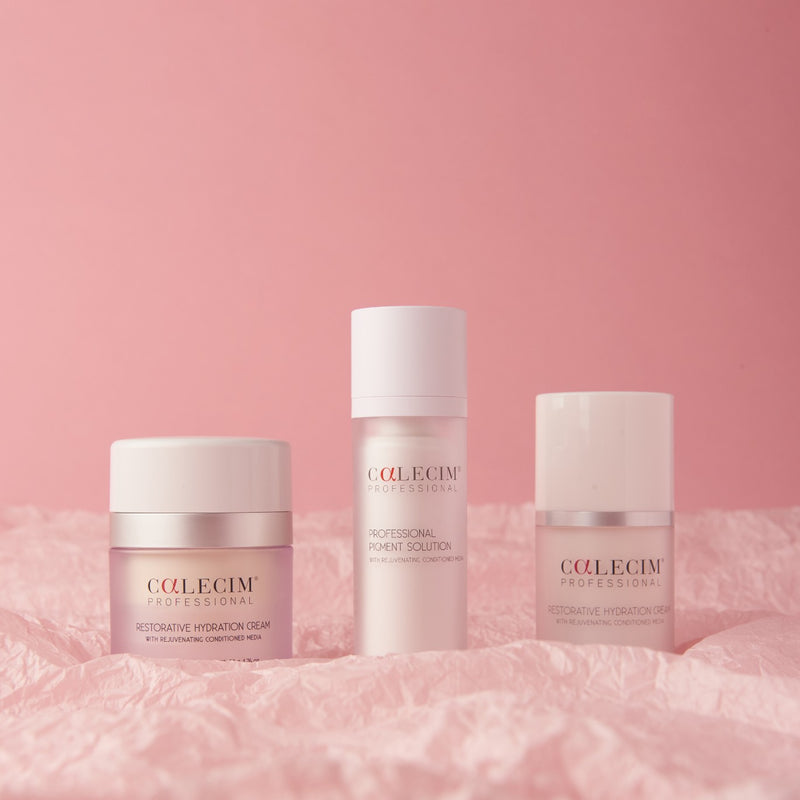
Recommended product: CALECIM Hair Serum. This serum may be considered later as part of surgeon-approved scalp support, but it should not be applied to treat acute swelling or used before the clinic confirms that topical care is appropriate.
CALECIM Hair Serum contains PTT-6®, a blend of growth factors, cytokines and exosomal proteins intended to support biological signaling within the scalp and follicular environment.
In laboratory research, dermal papilla cells exposed to red deer umbilical cord lining mesenchymal stem cell exosomal proteins showed a reported 30-fold reduction in TNF-α, a pro-inflammatory signaling molecule. The same research reported increased dermal papilla cell proliferation. Read the research summary.
These findings are relevant to the biological discussion of inflammatory signaling, but they were produced in cultured cells. They do not demonstrate that CALECIM Hair Serum prevents or treats postoperative swelling in hair transplant patients.
The serum should not be presented as a treatment for edema, infection or another surgical complication. If incorporated into recovery, it should be introduced only with the transplant surgeon’s approval and used according to the clinic’s instructions.
The practical takeaway
Swelling after a hair transplant is usually expected, temporary and most noticeable during the first several days. Head elevation, rest, appropriate hydration and adherence to the clinic’s medication and aftercare plan are generally the safest ways to manage it.
The transplant clinic should assess swelling that is severe, worsening, unusually painful or accompanied by signs of infection or impaired healing.