

Hair talks
How hair loss affects women throughout their life - and what they can do about it.
This advertisement feature has been produced for Calecim by BBC StoryWorks Commercial Productions.

I never thought much about how much hair I had until it started falling out — then it was hard to think about anything else.
And the more I read about it, the more I realised how common it is for women to lose hair or experience thinning hair at different stages of life for very normal biological reasons (for me, after having my second baby). Despite everything I read, though, I simply couldn't understand why, when the fact that fewer than 45% of women will get through their life with a full head of hair, we don't talk about this more openly. Then the answer hit me like a tonne of bricks: shame.
No matter how much we learn about women's health and attempt to drive forward our understanding of how the female body works, we still live in a culture in which a very narrow concept of beauty prevails. And within the tight confines of this definition of physical worth, hair plays a huge role — not just in how we are perceived by the outside world, but in the strength of our own self-confidence and how we feel about ourselves.

I spoke to women who had experienced hair loss at different stages of life and explored the paths they took to address it: from seeking medical advice to tackling underlying health issues and the aesthetic products they tried alongside such as Calecim Hair Serum, in the hope of supporting hair regrowth and rebuilding their confidence.


Hannah Goabardi, trichologist, UK
Hannah Goabardi is a trichologist running a bustling clinic in London, where she has seen thousands of women pass through her doors over the past 15 years concerned about changes to their hair. The clinic has been engaged by Calecim to carry out a paid clinical evaluation involving a small number of patients. "If you've always had lovely hair, and then suddenly it begins to change," she says, it doesn't take long before your confidence starts to suffer. Her clients have described some of the impacts that can have. "Soon you're thinking 'I've got to put some hair extensions in,' or 'I don't want to get on that Zoom now, because I feel like everyone's staring at my hair — so you start avoiding things.'' She has, she says, seen many, many women who have always been super confident suddenly find themselves struggling after losing hair. “It [hair loss] has a huge effect on our mental health.”
But as Goabardi explains, hair loss – such as shedding or gradual thinning – can have many causes – hormonal shifts, mineral deficiencies or stress for example – and increasing our awareness about the various causes of hair loss some women experience, can be a good way to help to break down the stigma and help people feel more in control. So, I set about speaking to a couple of women and sharing my own story in order to do just that, as well as hear positive stories to help those going through this tricky emotional experience.


A hairdresser experiences hair loss postpartum
Amanda Kyranis, hairdresser, Australia
As a hairdresser, Amanda Kyranis, was ahead of the game when it came to postnatal hair loss. Telogen effluvium is a type of temporary hair loss that is thought to be common in women (although the actual prevalence has not been quantified) a few months after giving birth, as the body responds to normal hormonal shifts postpartum. "In about three days I'm guessing I lost about 30% of my hair," she tells me. "It was all coming out".
Despite the fact she spends a lot of time at work advising women who have experienced some degree of hair shedding or loss on how to help support it as it regrows, she found it really hard to navigate emotionally. "My hair is my thing, so I didn't really cope," she says. While most postpartum shedding tends to resolve itself naturally over time, having guided many women through this experience, Amanda was aware of a product she believed could help support the hair as it was regrowing.
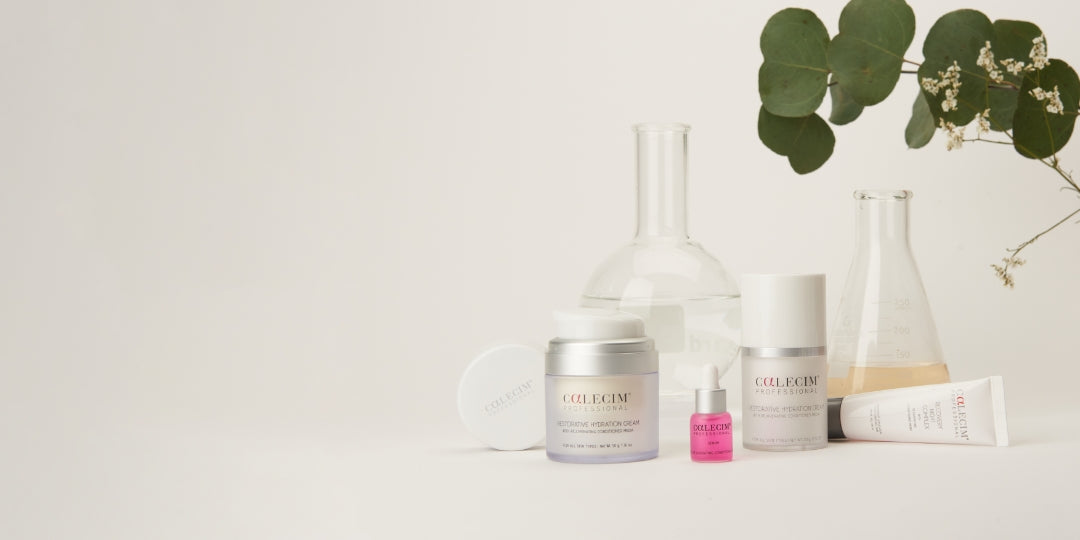
Calecim's Hair Serum, which contains a complex of proteins and exosomal extracts to help improve the appearance of the scalp and hair, is a product she has used frequently on her customers. She says having received positive feedback from clients gave her confidence to try it on herself.
"I love it," Amanda says, "my hair feels so strong and healthy."


Iron deficiency as a cause of hair loss in women
Rose Stokes, writer, UK
I am someone who often sheds hair — I have a lot of it — so it can be hard to pinpoint when exactly the volume began increasing dramatically. But last year, when my second baby was approaching one year old, I started to notice that my hair felt thinner — it knocked my confidence more than I ever could have expected. Alongside this, I had other symptoms; I would feel dizzy and breathless after walking up the stairs, chronically exhausted no matter how much I slept, recurrent tongue ulcers and a strange taste in my mouth, anxiety and some low mood, brain fog and memory problems, honestly, I thought I was losing my mind.
Until a friend suggested I visit my doctor to get my ferritin (a protein that stores iron in cells) levels tested.
When the results came back showing severe iron deficiency, it all started to make sense. Roughly one in two women end up with iron deficiency after pregnancy, and your risk increases if you have two babies close together, which I did (two years apart). Goabardi tells me that given how common iron deficiency is — affecting one in three women of reproductive age — she always tests for it with clients who come to her clinic. "We find that ferritin is very important for your hair," she says.
The good news for me was that there was a clear cause which could be treated by my doctor. While there are several treatment options, through trial and error, my doctor recommended I get an iron infusion. Since then, I have seen a gradual improvement over time, and I am so glad to have found the underlying reason.


Going through the menopause
Shari Koffman, TV presenter, Canada
When Shari Koffman, who presents a beauty segment on a morning TV show in Canada, went into perimenopause at 46, she began to experience noticeable changes to her hair. Like many women, she noticed increased shedding (a fairly common response to normal hormonal shifts that happen as women approach menopause).
"I completely panicked because I have fine, thin hair to begin with, so I really can't afford to lose any hair," she says. Not just that, but she felt incredibly self-conscious, as someone who regularly goes on national TV to discuss beauty. "I had to cut it really short," she explains. It is not a haircut she felt comfortable with, having always had longer, lush locks. Over a period of a few weeks, she says, she was totally transformed. "It mostly happened in the shower," she says, "I'd see it collecting in the drain [...] then when blow drying my hair, I would see it all over the floor [...] it would all be in the brush or in the sink — it was really frightening."
Over the next ten years she went through various episodes of hair shedding, each time trying different aesthetic products on the market. "Because I do beauty segments on TV, I did a lot of research and kept returning to one product that had really good reviews, so I tried it."
Calecim Hair Serum became part of Shari's routine as she focused on supporting the look and feel of her hair. Alongside hair extensions to help to give her hair more fullness, she says she is now finally back to a place where she feels good with her hair and feels much more confident.
And though aesthetic products cannot address any underlying hormonal changes or other medical cause that might be responsible for hair shedding, she feels that including Calecim's serum into her routine has really helped improve the appearance of her hair.
"My confidence is so much better now," she tells me. "That is a mental journey that you go through in menopause [...] about a year ago, I felt like there was an acceptance that finally happened — there was clarity and and now I just deal with it so much better."


.jpg?v=1746528011060)